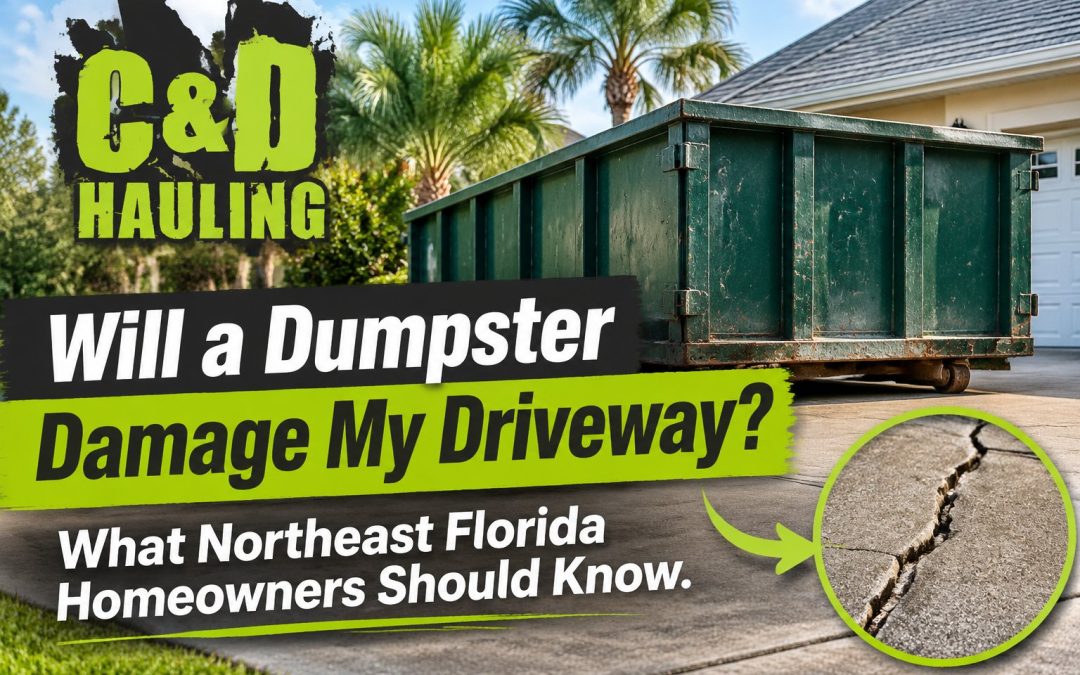
Dumpster driveway damage is one of the first worries homeowners raise before a renovation. After all, a loaded container is heavy, and your driveway cost real money to install. The good news is that damage is not a given. With the right container and smart placement, you can keep your driveway looking the way it did before the project started. In this guide, we explain why damage happens, which surfaces need extra care, and how to avoid problems in Northeast Florida.
Why Dumpster Driveway Damage Happens
Most dumpster driveway damage comes from three things: weight, movement, and heat. First, a full container puts a lot of weight on a small area. Second, crews usually slide or drag traditional roll-off containers into place on steel rails. As a result, those rails can scratch concrete, gouge asphalt, and scrape the surface of pavers.
Florida weather adds another factor. Asphalt softens in summer heat, so a heavy container left in one spot can leave dents or marks. Likewise, heavy rain can soften the ground along the edges of a driveway, which makes cracking and sinking more likely.
Finally, the condition of your driveway matters. Older surfaces with existing cracks, tree root damage, or crumbling edges are more vulnerable than newer ones. Therefore, it pays to look closely at your driveway before delivery day.
How Rubber-Tired Containers Help Prevent Dumpster Driveway Damage
Container design makes a big difference. Our containers sit on rubber tires instead of steel rails, so they roll into position rather than scraping across the surface. In addition, the tandem axle design gives the container more points of support under the load.
Because of this design, we can place containers on surfaces that would be risky for a standard roll-off, including paver driveways. Rubber tires also allow close placement. As a result, you can keep the container near your work area, whether that is a roof tear-off or a kitchen gut.
Of course, no container removes every risk. Weight, weather, and surface condition still matter. That is why placement and loading habits are just as important as the equipment.
Which Driveway Surfaces Need Extra Care?
Concrete Driveways
Concrete handles weight well, but it can still crack where it is already weak. Hairline cracks, thin edges, and sections lifted by tree roots deserve extra attention. For example, mature oaks are common across Northeast Florida, and their roots can lift slabs near the street. Ask us to place the container on the strongest, flattest part of the slab.
Asphalt Driveways
Asphalt is the most heat-sensitive surface, so it carries the highest risk of dumpster driveway damage. During Florida summers, hot pavement can soften and hold marks from tires or heavy loads. New or freshly sealed driveways are especially vulnerable. Consequently, keep the rental period short if you have asphalt, and avoid parking other vehicles near the container.
Paver Driveways
Pavers are popular across Northeast Florida, including St. Augustine. Because they sit on a compacted base, concentrated weight can shift or sink individual pavers. Rubber tires are much gentler on pavers than steel rails dragged across them. Even so, avoid overloading the container, and let us know ahead of time if your pavers are older or loose.
7 Ways to Avoid Dumpster Driveway Damage
- Photograph your driveway first. Take a few clear photos before delivery. Later, you will have a record of the surface’s condition.
- Ask about the container type. Rubber tires and steel rails treat surfaces very differently, so confirm which one your hauler uses.
- Choose the right spot. Pick the flattest, strongest part of the driveway, and keep the container away from cracked edges. Also stay clear of sprinkler heads, irrigation lines, and landscape lighting.
- Load heavy items low and spread them out. For instance, place concrete, tile, and brick on the bottom and distribute them evenly. The Florida Department of Environmental Protection includes brick and concrete among common construction and demolition materials, and both are heavy.
- Keep the rental period reasonable. Heat and weight add up over time, so long rentals raise the risk on asphalt.
- Watch the weather. After heavy rain, soft ground along the edges can give way. Call us before delivery if storms are in the forecast.
- Tell us about problem areas. Loose pavers, sinking spots, and fresh sealcoat all affect placement. Moreover, a quick call lets our drivers adjust the plan before they arrive.
What If Your Driveway Is Not the Right Spot?
Sometimes the driveway is simply the wrong place. For example, a brand-new asphalt driveway or a badly cracked slab may not be worth the risk. In those cases, you can still avoid dumpster driveway damage with a few alternatives.
- Curbside placement: Some cities, counties, and HOAs have rules for street placement, so check the requirements first.
- Firm, level ground: A solid lawn area or gravel pad can work, although soft soil after rain can be a problem.
- Side or rear access: Another entrance may give you a stronger surface close to the work area.
Whichever option you choose, tell us early. As a result, we can confirm that the container will fit and help you pick the best spot.
Dumpster Rentals for Homeowners in Jacksonville, St. Augustine, and Orange Park
C & D Hauling serves homeowners and contractors across Duval, Clay, St. Johns, Nassau, and Bradford Counties. Each area has its own driveway challenges. For instance, St. Augustine dumpster rentals often involve paver driveways and narrow streets. Meanwhile, Orange Park dumpster rentals frequently involve established neighborhoods with mature landscaping. In Jacksonville, projects range from quick cleanouts to full remodels.
Not sure which size you need? Our guide to dumpster rental sizes for Jacksonville homeowners breaks it down. You can also see how our remodel debris removal and reroof debris removal services work for common home projects. For the full lineup, visit our dumpster rentals page.
Dumpster Driveway Damage FAQs
Can a dumpster crack my concrete driveway? It is possible, especially if the slab is already cracked or thin along the edges. However, a rubber-tired container, careful placement, and a balanced load all reduce the risk.
Should I put plywood under a dumpster? Plywood is a common safeguard under steel-rail containers because it spreads pressure across the surface. With rubber-tired containers, the need is different, so ask your hauler what they recommend for your driveway.
What if my driveway is damaged anyway? Rental terms vary, so ask your hauler about their policies before delivery. In addition, your before photos will help document the surface’s condition.
Protect Your Driveway With the Right Plan
Dumpster driveway damage is easy to avoid when you plan ahead. Choose the right container, pick a strong spot, and load it with care. If you are planning a project in Northeast Florida, contact C & D Hauling for a free quote. We will help you choose a container and a placement that protects your driveway from start to finish. Prefer to talk it through? Call (904) 838-3552.